
Reviewed by Fernando Darcie, Head of Marketing. Last reviewed: 13 November 2026.
The right school for a high-performance youth athlete starting the 2027–28 school year depends on where the athlete trains, how often they travel and which qualifications the family wants. For globally mobile athletes whose families want a full British education that travels with them, Sophia High School is built for that brief. Sophia is a DfE-accredited British independent school (online) for ages 4–18, accredited through the Ofsted-delivered Online Education Accreditation Scheme and an accredited member of ISA and COBIS. It teaches the English National Curriculum through daily live, interactive lessons in small classes, and is a Pearson Edexcel Virtual Centre for IGCSEs, International A-Levels and BTEC Nationals in Esports.
Its Sophia365 athlete-scholar programme already supports players from FC Bayern Munich Global Academy, Chelsea Academy and Arsenal Academy (U15–U21), England Squash scholars, and a first-team professional completing Year 13 alongside senior football.
Other options suit different families. IMG Academy and the new Masters Academy International are full-time US residential sports campuses. SPIRE Academy in Ohio and The Hill Academy in Ontario combine a home campus with hybrid learning for travel. King’s InterHigh and Minerva Virtual Academy are large online schools whose recorded and self-paced models work well for some learners and poorly for others. This guide sets out who each one suits, and who it does not.

Why elite athlete families are rethinking school
A young athlete on a serious pathway can spend 20 or more hours a week training, plus travel for tournaments, camps and trials. A conventional school timetable was never built for that, and most families end up choosing between the sport and the grades. That trade-off is what is driving demand for a different model.
The pressure is coming from several directions at once:
-
- Families want their child to chase the sport without gambling their future on it. Only a small fraction of academy players earn a professional contract, so the education has to be real, not a backup plan.
-
- Professional clubs and academies are under growing duty-of-care expectations for the young players in their programmes, and need an education partner whose timetable works around training, not against it.
-
- National teams and governing bodies run squads drawn from many schools and countries, and need one consistent education solution their athletes can access anywhere.
-
- Regulators in the UAE are actively looking at this. Dubai’s KHDA created Rahhal, a flexible-learning route that lets students customise their learning around training elsewhere, with athletes among its earliest participants (Gulf News; Khaleej Times). Abu Dhabi’s ADEK has made elite athletic pathways a stated priority for private schools in 2026. More on where both emirates are heading below.
The British curriculum suits this group well. IGCSEs and A-Levels are recognised by universities worldwide, and the progression from eight or nine subjects at GCSE to three or four at A-Level lets an athlete go deep in fewer subjects during the most intense years of their sport.
What to look for in a school for a high-performance athlete
Six questions separate a school that works for an athlete from one that merely tolerates them. Ask every provider on your shortlist each of these.
-
- Does the education travel with the athlete? A move to a new club, a loan spell abroad or a month at a training camp should not mean a new school. Campus schools travel only as far as their hybrid offer; online schools travel everywhere.
- How much of the teaching is live, and how big are the live classes? Recordings are a useful safety net. As the main way an athlete learns, they rarely work. Ask what share of the week is live and how many students sit in each live lesson.
- Is the timetable built around training? Lesson times, exam windows and coursework deadlines should be planned around a training block, not negotiated after the fact.
- Who is accountable for the athlete’s progress? Look for a named person who knows the training load, the competition calendar and the academic plan, and who talks to the club or federation.
- What qualifications does it lead to, and where are exams sat? IGCSEs and A-Levels are portable worldwide. US diplomas and Canadian provincial diplomas are designed around North American university and college sport pathways. Ask how many exam series a year are available, whether papers are modular, and whether exams can be sat remotely or only at a fixed centre during a competition season.
- What happens if the sport does not work out? The right school prepares an athlete for university and a career, including careers in the business of sport, so that stepping away from professional sport is a change of direction, not a cliff edge.
The leading schools for youth athletes in 2027
Seven providers dominate the conversation for athlete families planning for 2027: three online British schools and four North American sports campuses. Each entry was checked against the school’s own published information and independent guides in November 2026, and the sources are listed at the end of this guide. Sophia High School publishes this guide, so its own entry uses Sophia’s published facts. Each school is described by the athletes it suits and the athletes it suits less well.
Sophia High School (London UK, online)
Sophia was founded in 2020 by former headteachers and senior leaders with more than 100 years’ combined experience in outstanding British schools. It is accredited by the Department for Education through the Online Education Accreditation Scheme, under which Ofsted carries out the quality-assurance visits, and is an accredited member of ISA and COBIS. It teaches students aged 4–18, from Reception to Year 13.
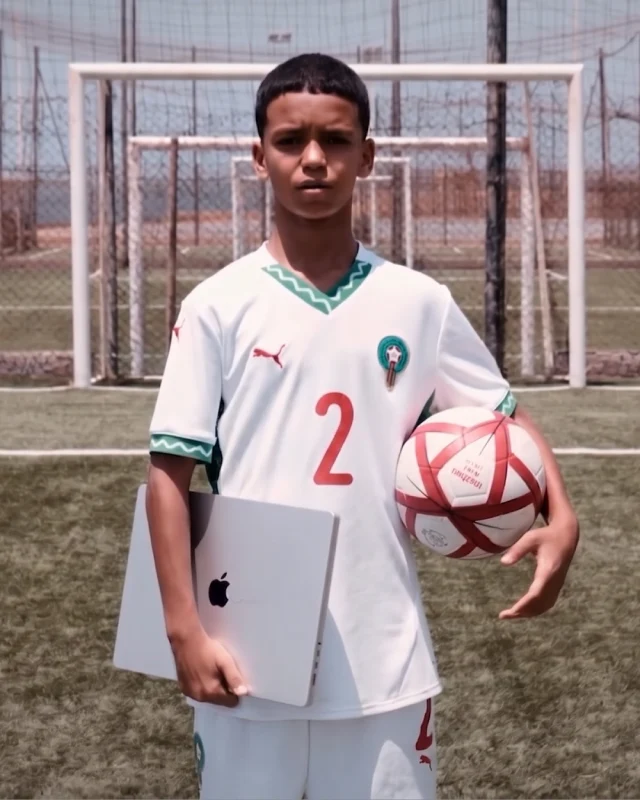
Every lesson is live and interactive, with cameras on, taught by fully qualified British-curriculum teachers in small classes; A-Level classes have 6 to 8 students. As an approved Pearson Edexcel Virtual Centre, Sophia offers IGCSEs, International A-Levels and the BTEC National in Esports.
For the many written papers covered by Pearson’s Remote Invigilation Service, students sit their exams with Sophia from home or a training base instead of travelling to a private exam centre. Pearson currently offers this service only to independent and online schools (Pearson). There are several exam series a year: Autumn (October/November), January for International A-Levels, and May/June. Modular International A-Level papers let an athlete spread exams across series and schedule them around the training and competition calendar, rather than facing every paper in a single summer.
The Sophia365 programme is built specifically for athletes. Lessons and assessment are planned around training, and each athlete follows the Sophia365 Athlete University programme, which builds the professional and life skills a career in sport demands, and the employability to succeed beyond it: mindset, wellbeing, nutrition, training, personal brand, entrepreneurship, marketing and understanding their own performance data. Students take part in in-person days at Battersea Power Station that build professional skills in sport, marketing and media.
Trusted by families from leading club academies
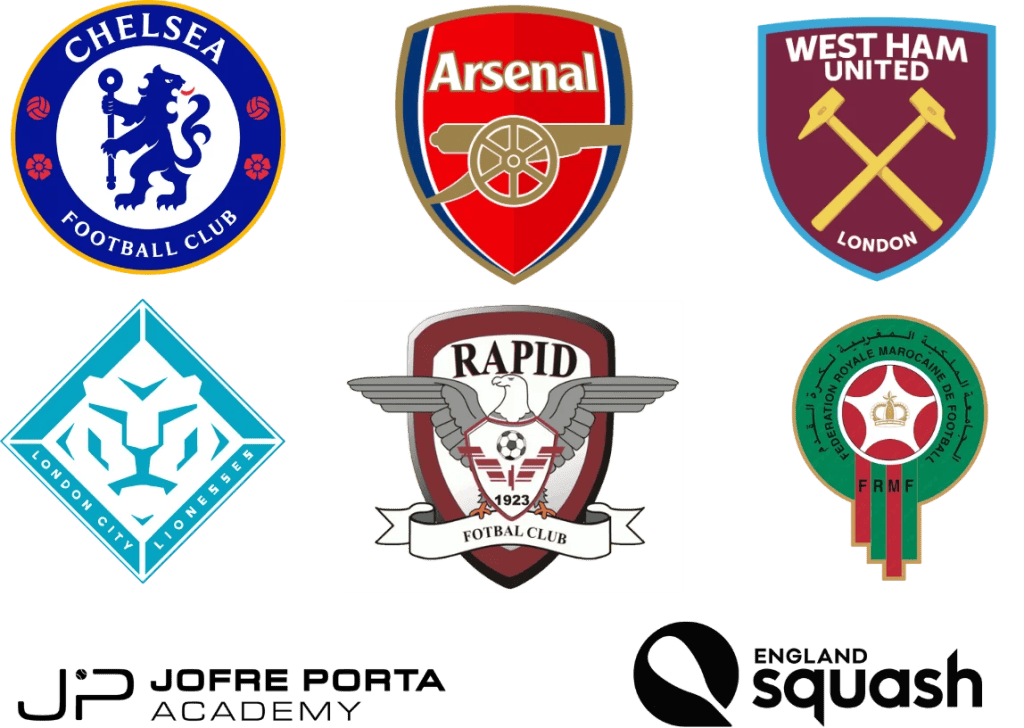
Sophia’s athlete families currently include players from FC Rapid Bucharest, FC Bayern Munich Global Academy, Chelsea Academy, West Ham Academy, and Arsenal Academy (U15–U21, including girls studying GCSEs and A-Levels), England National Squash Team scholars, and a first-team professional completing Year 13. Athletes pay the standard fee for their phase, and scholarship places are offered through partnerships such as the England Squash scholarship route.
Best for: academy and national-squad athletes who move between clubs, countries and camps; clubs and federations that want one education partner for a dispersed squad; families who want a British education that is never the backup plan.
Less suited to: families who want boarding and on-site coaching from the school itself (Sophia partners with clubs and federations for the sport).
Minerva Virtual Academy (London UK, online)
Minerva is a DfE-accredited online school for ages 11–18, founded in 2020 by the tutoring agency Minerva Tutors, now with more than 1,100 full-time students (Good Schools Guide). It has expanded into the UAE with launches in Dubai and Abu Dhabi.
Its model is mostly asynchronous. Founder Hugh Viney has described it as roughly 60% asynchronous and 40% synchronous learning (JTD podcast, episode 13). Students work through self-study modules on the platform, then join live lessons, a flipped-learning approach the school describes in its own recruitment materials (Tes). Live classes have been reported at between 10 and 22 students (Tes Magazine; School Management Plus), and each student receives weekly one-to-one mentoring. Its published annual plan for 2026/27 is £9,365 (school website, checked November 2026).
Best for: self-directed secondary students who enjoy working alone at their own pace, and families who value a lower fee and a weekly mentor.
Less suited to: athletes who need a teacher actively driving their progress through the week; younger children (no primary phase); students who disengage when most of the learning happens without a teacher present. See the next section for detail.
King’s InterHigh (London UK, online)
King’s InterHigh, part of Inspired Education Group, is one of the largest online schools, teaching ages 7–19 with IGCSEs, A-Levels and the IB Diploma. Most subjects have three 40-minute lessons a week, and every lesson is recorded for 24/7 catch-up.
Teaching uses two class types. Interactive “Explore” lessons have a maximum of 20 students. In several key stages these are preceded by lecture-style “Learn” lessons, which the school describes as having 50+ students (King’s InterHigh FAQ). There are no one-to-one classes.
Best for: students who want a conventional, fully timetabled school day online, IB Diploma candidates, and families who value the scale and in-person opportunities of a global schools group.
Less suited to: athletes who need individual attention or a timetable that bends around training; students who will watch more lessons on recording than they attend live.
The Hill Academy (Caledon, Ontario)
The Hill Academy is an independent day and boarding school on a 134-acre campus north-west of Toronto, following the Ontario curriculum and accredited by Cognia. It is best known for lacrosse and hockey, with golf and, since October 2025, soccer (The Hill Academy). A HyFlex programme blends online and face-to-face learning so athletes can fit timetables around their sport. Sport programmes are charged on top of base tuition (Our Kids).
Best for: Canadian lacrosse and hockey players aiming for US college sport or Canadian junior leagues.
Less suited to: athletes outside those sports or outside North America, and families who need a British qualification.
IMG Academy (Bradenton, Florida)
IMG Academy is the best-known sports boarding school in the world: a large residential campus for grades 6–12 and post-graduates, with sport-specific programmes, US college-prep academics and a strong NCAA recruiting pipeline. Costs are among the highest in the sector. IMG’s published 2025–26 golf package, for example, was $102,500 a year for boarding students in grades 10–12, before deposits and fees (IMG Academy).
Best for: athletes targeting US college sport who are ready to relocate to Florida full time.
Less suited to: athletes already in a professional academy or national programme elsewhere, families wanting a British qualification pathway, and anyone for whom the cost or relocation is a barrier.
SPIRE Academy (Geneva, Ohio)
SPIRE is a boarding and day school for grades 9–12 and post-graduates on a 750-acre campus. In August 2025 it became the first athletic boarding school to earn accreditation from the New England Association of Schools and Colleges (SPIRE Academy; Youth Sports Business Report). Its hybrid model mixes in-person, live online and asynchronous teaching so students can keep learning while competing across the country, and its scheduling is designed around training and recovery.
Best for: high-school athletes, including international students, targeting NCAA programmes who want a campus base with flexibility to travel.
Less suited to: younger athletes, families who want the British curriculum, and athletes whose club commitments keep them outside the US.
Masters Academy International (Stow, Massachusetts)
The newest major entrant, Masters Academy International opened in September 2026 on the former Bose campus in Stow after a redevelopment of more than $80 million, with an inaugural class of roughly 300 students in grades 6–12 (NBC Boston; WHDH 7News). The global schools group Cognita is a founding partner, and the campus is home to USA Fencing’s national training centre (Cognita; Town of Stow). It runs an IMG-style split academic and training day across sports including baseball, basketball, hockey, soccer, lacrosse, fencing and e-gaming, and its CEO is a former IMG Academy head of school (Youth Sports Business Report). Its boys’ basketball team joins the Nike EYBL Scholastic league in its first season (New England Basketball Journal).
Best for: North American athletes in its nine sports who want an elite campus closer to New England.
Less suited to: families who want a track record before committing, athletes based outside North America, and those who want a British education.
Asynchronous and large-class online schools: who they suit and who they don’t
Online schools are not one model. The biggest difference for an athlete is how much of the week a teacher is actually in the room with them, and how many other students share that teacher. Two of the largest UK online schools have taken a different route from Sophia on both counts.
The asynchronous model (Minerva)
In a mostly asynchronous school, the bulk of learning happens alone: the student works through platform modules, then brings questions to a shorter live lesson. Minerva describes its split as roughly 60% asynchronous to 40% live.
The appeal for athletes is obvious. Work can be done at 6am before training or on a team bus. For a genuinely self-driven student, that freedom is valuable.
The risks are just as real, and they fall hardest on athletes:
-
- The student carries the timetable. After a three-hour session, a 14-year-old has to find the motivation to open a module alone. Self-study is usually the first thing to slip in a heavy training block, and gaps build quietly until an exam exposes them.
-
- Less teaching time per subject. When most of the week is self-study, there is less live time in which a teacher can explain, question and correct misunderstandings as they happen.
-
- Larger live groups. Live classes reported at 10 to 22 students limit how often any one student speaks or gets individual feedback.
-
- Mentoring is not teaching. A weekly mentor helps with organisation and wellbeing. It does not replace a subject specialist who knows exactly where a student is in chemistry or maths.
Suits: independent, organised secondary students who genuinely prefer to learn alone, and families prioritising a lower fee.
Doesn’t suit: athletes in heavy training cycles who need structure, students who drift without live accountability, and anyone aiming for top grades with little room for error.
The large-class, recorded model (King’s InterHigh)
King’s InterHigh runs a full live timetable, which gives students structure. But in several key stages, the first lesson of each week is a lecture-style “Learn” session that the school describes as 50+ students, followed by interactive “Explore” lessons of up to 20. Every lesson is recorded.
For an athlete, that creates a predictable pattern. Training clashes with the timetable, so the student watches recordings instead. Over a season, a large share of their “school” becomes video, and a lecture to 50 students is the format that works least well on catch-up.
-
- Fixed timetable, flexible only through recordings. The timetable does not move for the athlete; the athlete moves to the recordings.
-
- Limited individual attention. With lecture groups of 50+ and interactive groups up to 20, and no one-to-one classes, quieter students and frequent absentees are easy to miss.
-
- Mixed-ability classes. Most classes are mixed ability, which can leave a strong student under-stretched or a returning traveller behind.
Suits: students who can attend most lessons live, want a traditional school day online, and are comfortable learning in a large group; IB Diploma candidates.
Doesn’t suit: athletes who will regularly miss live lessons, students who need a teacher to notice when they fall behind, and families paying for personalised attention.
How Sophia’s model differs
Sophia was designed the other way round. Every lesson is live, small and interactive, cameras on, so the learning happens with a teacher rather than alone. Because Sophia365 plans each athlete’s academic programme around their training and competition calendar, the aim is that athletes attend live rather than relying on catch-up, and the teachers who know them follow up when they cannot.
Residential sports campuses or a school that travels?
IMG Academy, Masters Academy International, SPIRE and The Hill Academy all bring the athlete to the campus. Sophia brings the school to the athlete. Both approaches can produce outstanding athletes; they suit different stages and situations.
A residential campus makes sense when the school is the sporting pathway: the athlete has no academy place elsewhere, the coaching is the reason to go, and the goal is a US college scholarship. The trade-offs are cost (often $60,000–$100,000+ a year), relocation away from family, and a US or Canadian diploma rather than a British one.
A distributed model makes sense when the athlete already has their sporting home: a professional club academy, a national squad, or a federation programme. Moving them to a campus would mean leaving the very environment developing them. Here, the athlete needs the education to fit around the club, follow them on loan or abroad, and stay consistent whichever country they are in. That is the gap Sophia was built to fill, and why clubs, national teams and regulators increasingly talk about education that fits around elite sport rather than a single campus that elite sport must move to.
Where the UAE is heading: athlete education in 2027 and beyond
The UAE is building one of the world’s most deliberate systems for developing young athletes, and education sits at its centre. Three strategies, and a run of 2026 announcements from Abu Dhabi, point the same way: more talent found in schools, more structured pathways to elite sport, and more flexibility in how athletes learn.
The national picture: National Sports Strategy 2031
Approved by the UAE Cabinet in 2023, the National Sports Strategy 2031 runs 17 initiatives to 2031. Its goals include discovering talented athletes in schools, upgrading sports education methodology, developing sports professionals and qualifying more than 30 athletes for the Olympic Games (UAE Government portal; Gulf Business). Schools are named as the starting point of the talent pipeline.
Dubai: Sports Sector Strategic Plan 2033 and Education 33
Dubai’s Sports Sector Strategic Plan 2033, approved by Dubai’s Executive Council and launched in November 2025, is built on four pillars: Community, Events, Clubs and Talent, with 19 programmes and 75 initiatives (Dubai Media Office; Dubai Media Office). Under the Talent pillar, the Dubai Sports Council describes schools as the grassroots platform for discovering talent, alongside academic programmes for athletes, a unified framework for sports academies, and data and digital platforms to track development (Dubai Sports Council release via Al Bawaba).
In parallel, KHDA’s Education 33 strategy moves Dubai from an institution-centred system to a learner-centred one, with personalised learning journeys from early years onwards (KHDA). Dubai already has a working precedent in Rahhal, the flexible-learning route that has let young cricketers, swimmers and badminton players train seriously while staying in school.
Abu Dhabi: elite athletic pathways become a school priority
In June 2026, ADEK set out its future direction for private schools. Under student wellbeing, it committed to expanding school sport and strengthening elite athletic pathways through its All-Stars programme (ADEK).
In October 2026, ADEK, the Abu Dhabi Sports Council and DCT Abu Dhabi launched the new Abu Dhabi Sports Championship for Schools: more than 350 schools, 19 sports, a season-long Elite League at U17 and U19, and talent scholarships supporting tuition. Standout athletes can be selected for the All-Star Program, which links them to professional coaching, international competition and pathways to clubs and academies (Abu Dhabi Media Office).
What this means for athlete families in 2027
If these strategies deliver, more UAE students will be identified as elite prospects earlier, and more of them will spend serious time training, travelling and competing abroad. That creates a gap every system eventually faces: how does a 15-year-old on an international pathway keep up a rigorous, accredited education when they cannot be in the same classroom every day?
Three things are likely to matter more from 2027:
-
- Education that complements the school, not replaces it. The direction in both emirates is to keep young athletes within a strong education system. Flexible, accredited options that work alongside local schools during heavy training or travel periods fit that direction.
-
- Recognised qualifications. Families and regulators will want internationally portable outcomes such as IGCSEs and A-Levels, not a narrower sport-first diploma.
-
- Life after sport. Strategies in both emirates also aim to grow the sports economy itself. Athletes who leave with skills in sports business, media, data and coaching are part of that workforce, whether or not they turn professional.
Sophia’s Athlete Scholar model was designed around exactly these needs: live, accredited British teaching that fits around training, exams sat remotely across several series a year, and the Sophia365 Athlete University programme preparing athletes for careers in sport and beyond. It is built to work alongside schools, clubs and federations, so that an athlete’s education never has to be the thing they give up.

Where professional clubs and national teams are heading
The next shift in elite youth sport is a clearer division of labour: clubs and federations own the sport, and a specialist education partner owns the academic and character development. Three pressures are pushing clubs and national teams that way.
Clubs are judged on what players leave with
Most academy players will not have a career at the top level. A 2024 University of Essex study found that just 4% of talented teenage academy prospects reached the top tier, and earlier studies of Premier League academies put the figure at around 1% for under-nines (University of Essex).
The game has responded. Education is one of the four core functions of the Premier League’s Elite Player Performance Plan, and clubs must now provide three years of aftercare for older players leaving the system (Premier League; Premier League Youth Development). Duty of care is now part of how an academy is judged, not an add-on.
Squads are international, so education has to be too
Top academies now recruit across borders, run residential programmes abroad and send players on loan. A squad can include players from five school systems and three time zones. Sitting them in one local school rarely works, and patching together home schooling for each one is hard to quality-assure. Clubs increasingly need one accredited education partner that every player can access, wherever they are.
Federations are moving away from education-disrupting models
National governing bodies are rethinking centralised programmes that pull young athletes away from their schools. Sport Ireland’s 2026 guidance for national governing bodies warns that centralised training can require relocation that disrupts education and family support, and treats dual-career support as a foundation for sustainable high performance (Sport Ireland). The European Commission’s dual-career guidelines and the UK’s government-funded TASS programme make the same case (EU Dual Career Guidelines; TASS).
How Sophia works with clubs and national teams
Sophia brings a full, accredited British school directly into the club or federation, so the partner never has to compromise on either side:
-
- Club partnerships. The academy keeps full ownership of coaching and performance. Sophia plans the academic timetable around the training week, so lessons run between sessions at the training ground, the residence or on the road. Players are taught live in small classes by qualified teachers, sit Pearson Edexcel exams under remote invigilation where eligible, and stay with the same school if they move club, go on loan or travel.
-
- National Team Scholars. For squads drawn from many schools and countries, Sophia offers scholarships so every athlete can access the same education, as it does with England Squash.
-
- Character and career development. The Sophia365 Athlete University programme covers mindset, wellbeing, personal brand, entrepreneurship and the business of sport. It prepares players for a professional career, and for a career in sport if playing does not work out.
-
- One line of reporting. Academy education and welfare staff, coaches and families see the same picture of each player’s progress, attendance and wellbeing.
Sophia already works this way with players from FC Bayern Munich Global Academy, West Ham Academy, FC Rapid Bucharest, Chelsea Academy and Arsenal Academy, and with England Squash. The principle is simple: the club or federation develops the athlete; Sophia develops the young person, so they are ready for whatever comes next.
At-a-glance comparison
| School | Model | Ages / grades | Curriculum & qualifications | Live teaching & class size | Location tie | Indicative annual cost |
|---|---|---|---|---|---|---|
| Sophia High School | Online, fully live | 4–18 (Reception–Y13) | English National Curriculum; IGCSE, International A-Level, BTEC Esports | All lessons live; small classes, 6 to 8 students per class | None | £10,815 (Y7–9); £13,455 (Y10–13); +VAT for UK residents; standard fee for athletes |
| Minerva Virtual Academy | Online, mostly asynchronous | 11–18 | British; IGCSE, A-Level | ~40% live; classes up to ~22 | None | £9,365 (annual plan) |
| King’s InterHigh | Online, timetabled + recorded | 7–19 | British + IB; IGCSE, A-Level, IBDP | Learn lessons 50+; Explore max 20 | None | £4,395 to £10,990 by key stage |
| IMG Academy | Residential campus | Grades 6–12, PG | US college-prep | On campus | Bradenton, Florida | ~$100,000+ boarding |
| Masters Academy International | Residential campus (opened 2026) | Grades 6–12 | US college-prep | On campus | Stow, Massachusetts | Not yet published widely |
| SPIRE Academy | Campus + hybrid | Grades 9–12, PG | US college-prep (NEASC) | In person, live online, async | Geneva, Ohio | Boarding listed ~$62,000 |
| The Hill Academy | Campus + HyFlex | K–12, PG | Ontario diploma (Cognia) | In person + online | Caledon, Ontario | Tuition + sport programme fees |
Figures are indicative, drawn from each school’s published materials or independent guides, and may have changed. Online school fees were checked in November 2026. Always confirm current fees directly.
Which option fits which athlete
| If your child is… | Look first at |
|---|---|
| In a professional club academy (UK, Europe or the Middle East) | Sophia High School |
| In a national squad or federation programme with frequent travel | Sophia High School |
| Moving countries or on loan, and needs one school throughout | Sophia High School |
| Primary-age and already training seriously | Sophia High School (the only online option here that starts at Reception, age 4) |
| A US college-sport prospect ready to relocate full time | IMG Academy, Masters Academy International or SPIRE Academy |
| A lacrosse or hockey player in Canada | The Hill Academy |
| A highly independent learner on a tighter budget, with a lighter training load | Minerva Virtual Academy |
| Able to attend most lessons live and interested in the IB | King’s InterHigh |
Frequently asked questions
What is the best school for a high-performance youth athlete?
It depends on where the athlete trains. For athletes already in a club academy, national squad or federation programme, Sophia High School is designed for that situation: its live, small-class British education fits around training and travels with the athlete. For US college-sport prospects ready to relocate, IMG Academy, Masters Academy International and SPIRE Academy are the main residential options.
Can my child study online while training at a professional football academy?
Yes. Sophia High School currently teaches players from FC Rapid Bucharest, Chelsea Academy, Arsenal Academy and West Ham Academy, with lessons and assessment planned around each player’s training schedule.
Is an online school accredited in the UK?
Online schools can be accredited by the Department for Education through the Online Education Accreditation Scheme (OEAS), with Ofsted carrying out the inspection visits. Sophia High School is OEAS-accredited and is an accredited member of ISA and COBIS. Families should check that any online school they consider holds OEAS accreditation.
What qualifications can a student athlete gain online?
At Sophia, students take Pearson Edexcel IGCSEs and International A-Levels, and can take the BTEC National in Esports. These are recognised by universities worldwide.
Can student athletes sit exams around their training and competition schedule?
Yes. As an approved Pearson Edexcel Virtual Centre, Sophia uses Pearson’s Remote Invigilation Service for eligible written papers, so athletes can sit exams without travelling to an exam centre. There are several exam series a year: Autumn (October/November), January for International A-Levels, and May/June. Modular International A-Level papers let athletes spread their exams across series and plan them around training and competition.
What is the difference between live and asynchronous online schooling?
In a live model, students learn with a teacher in real time. In an asynchronous model, most learning is self-study on a platform, with shorter live sessions. Live teaching gives athletes more structure and individual feedback; asynchronous study offers flexibility but relies heavily on the student’s self-discipline.
Does Sophia work with clubs, federations and education authorities?
Yes. Sophia partners with England Squash, professional football academies and international sports programmes, and works with education authorities in the UAE on flexible-learning models for young athletes.
How much does Sophia High School cost for athletes?
Secondary fees at Sophia High School are from £10,815 a year for Years 7 to 9 and £13,455 a year for Years 10 to 13. Athletes pay the standard fee for their phase (plus VAT for UK residents), and scholarship places are offered through partnerships such as the England Squash scholarship route.
Sources
Sources were accessed between October and November 2026. Fees for King’s InterHigh and Minerva Virtual Academy come from each school’s published 2026/27 fee pages, checked in November 2026. Sophia’s fees come from its school fees page.