Head of Science – Sophia High School
Blending Digital and Real-World Experiments in Online Science Classes
Part of the excitement of studying science is the hands-on experience of conducting experiments and observing the results firsthand. Watching a chemical reaction unfold, measuring the speed of a moving object, or testing the pH of a solution brings abstract concepts to life. While digital tools like simulations are invaluable for enhancing understanding, we complement them with real-world experiments whenever possible. The blend of digital and physical experimentation helps students grasp the practical implications of science and ignites their curiosity to explore the world around them.

Virtual Learning and Interactive Science Platforms
In our Science Department, we have embraced a range of innovative tools to support the KS3 and KS4 curriculum, offering both enrichment and accessibility to all students. The integration of virtual reality (VR), digital tools, and interactive platforms into lessons and independent learning has enabled students to visualise and understand the complex theories that underpin the curriculum.
Firstly, the use of Canva as our virtual book has been a game changer. Students can complete work, and teachers can mark in real time, providing instant feedback that students can respond to. This has helped us identify misconceptions quickly, improving the understanding of scientific theories.
Two of our most used VR platforms are Labster and PhET Interactive Simulations, which allow students to perform experiments and visualize scientific phenomena in a virtual environment.
Labster provides immersive VR experiences where students can explore realistic labs and conduct experiments that may otherwise be limited by resources or safety concerns.
PhET offers interactive simulations for topics ranging from forces and motion to chemical reactions. Its simplicity and accessibility make it ideal for visualizing abstract concepts like electricity flow or molecular bonding.
Gamification Strategies for Engaging Online Science Classes
One of the challenges faced by online teachers is the formative assessment and tracking of students’ progress. Frequently, we use Kahoot and Blooket to create interactive quizzes that test students’ grasp of key concepts. Not only is this a fun and interactive addition to the lesson, but it also helps break the ice between students and develop friendships within classes. Our KS3 science groups are very competitive and work well in teams to win points, displaying their knowledge of the topic without realising it.
Ensuring Inclusion in Science with Digital Tools
Understanding that some students experience anxiety in traditional classroom settings, we have integrated Curipod into our lessons. This platform allows students to engage anonymously, submitting their ideas and answering questions without the fear of being judged. For instance, during group discussions or question-and-answer sessions, Curipod enables even the shyest students to participate fully, ensuring inclusivity and equal opportunity for learning.
Genially is used by teachers of all key stages for creating interactive and independent assignments that students can work through at their own pace. The addition of a rubric helps guide students to develop their answers, ensuring they know their current “working at level” and how to improve. As a fun, challenging activity, escape rooms designed in Genially serve as excellent end-of-topic reviews, testing students’ knowledge and critical thinking skills.
Exploring Science Concepts Through Minecraft and YouTube
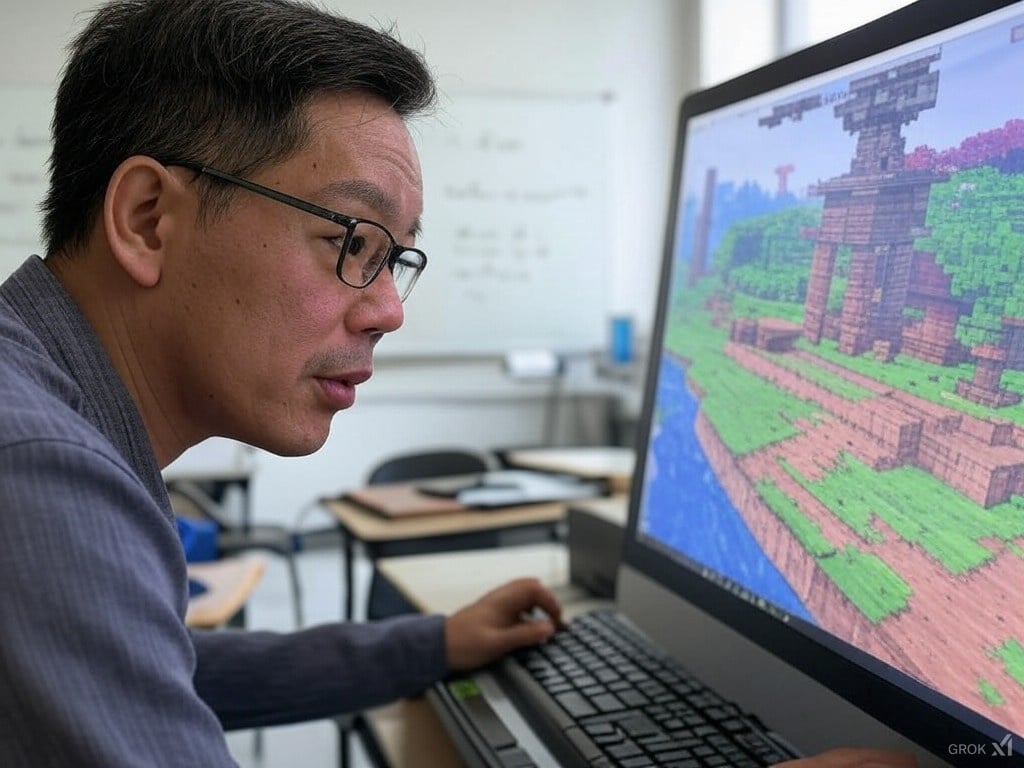
Minecraft: Education Edition is a recent tool we have been using in classrooms to bring physics concepts to life. For example, in a GCSE lesson on motion, students built towers within the game to explore the relationship between height (distance), time, and speed. They dropped objects from different tower heights, timed their fall, and calculated the speed of the objects using the formula:
Speed = distance ÷ time
This hands-on activity made the abstract concepts of motion tangible and engaging. Students could visually see how the height of the tower affected the time of fall, and the interactive nature of Minecraft encouraged collaboration, critical thinking, and a deeper understanding of the topic. By integrating gamification, the lesson became a dynamic and memorable experience.
Finally, YouTube remains the cornerstone of many online science classes. It is an indispensable tool for science education, particularly because of its vast library of videos tailored to the British National Curriculum. The videos provide engaging animations and real-world video footage of scientific processes, making complex theories more accessible and enhancing students’ understanding of the concepts we teach.
As we continue to explore the potential of technology in education, we continue to expand our use of digital tools and platforms to meet the evolving needs of our students. By leveraging these resources, we are creating a dynamic and supportive learning environment that nurtures curiosity, creativity, and excellence in online science classes. We are also providing our students with the advantage of becoming computer literate, equipping them with essential skills for navigating an increasingly technology-driven world.