As the world becomes increasingly globalised, providing students with international perspectives is vital in any type of school – state, public, international or online. Humanities subjects create a fantastic opportunity to provide a range of perspectives and, as a history specialist, this is something I have always tried to bring into lessons and curriculum planning. Through enquiry and project-based learning, humanities subjects have the capacity to create reflective and responsible Global Citizens.
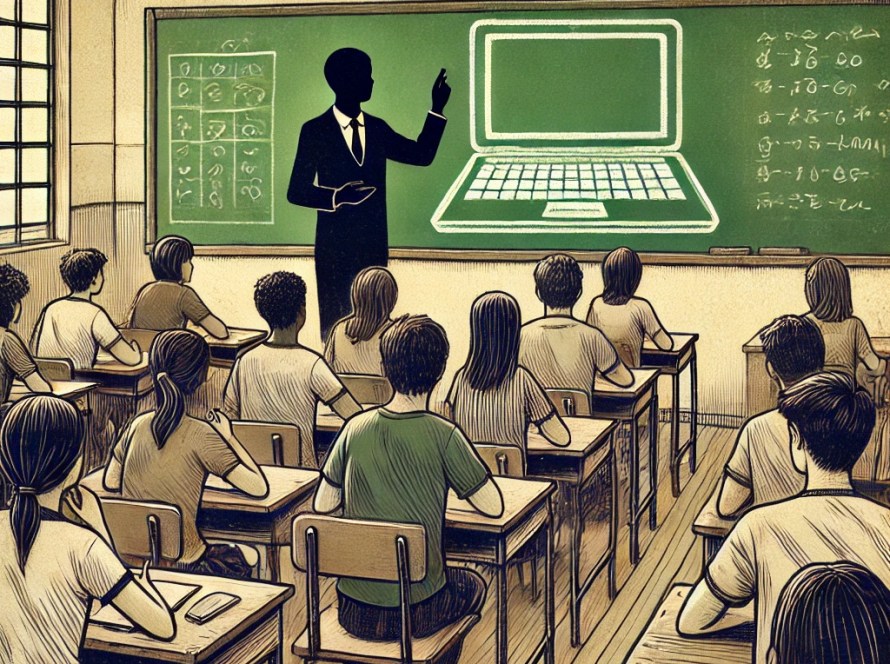
Online schools provide an opportunity to make humanities education more accessible, interactive, and globally relevant. Through the use of a range of digital technologies, teachers engage students in meaningful discussions, expose them to diverse perspectives, and help them develop the critical thinking skills necessary for responsible global citizenship.

Making Humanities Relevant to Students
At Sophia High School, humanities subjects are taught through the lense of the United Nations’ sustainable development goals – this provides rich content for both academic challenge and the propensity to apply the work to real world problems. Through the study of goals such as ‘life on land’, ‘no poverty’ or ‘quality education’ students learn through a range of humanities subjects linked to real world issues.
- Through the study of SDG 16 – ‘peace, justice and strong institutions’ students analyse the impact of World War One on the peace making process and the subsequent collapse of the Weimar Republic, these events are then linked to how democracy and elections are managed in modern society.
- A key element of SDG 15 – ‘life on land’ is the impact of deforestation and the issues around land degradation across many parts of the world. Students are able to learn through contemporary challenges and solutions, such as the impact of the LA fires on land degradation and the positive impact that projects such as the Great Green Wall, can have on combating these issues. In addition – through the study of permaculture spaces in local communities, students develop an understanding of the significance of green spaces in developing urban environments.
- Through the study of SDG 4 and 8 regarding ‘decent work and economic development’ and ‘quality education’, students first look back in time at the industrial revolution and the impact this had on working patterns as well as the progression and development of laws around child labour and compulsory education. Students can compare the challenges of work during the industrial revolution to contemporary issues around the world where exploitative labour practices still occur.
By studying geographical processes in topics such as life on land and clean water, as well as historical movements that drove progressive change, students can connect their learning to real-world issues. This approach highlights the significant role of humanities subjects in shaping informed and engaged global citizens.
Using Contemporary Issues to Engage Global Citizens


A great example can be investaged through the British Empire and the Transatlantic slave trade – a topic commonly taught at KS3. In June 2020, due to the nature of his involvement during the slave trade, the statue of Edward Colston was torn down and rolled into the Bristol Harbour as part of Black Lives Matter protest. This event happened in the city that I have lived in for the past five years and provides an important learning opportunity for a number of reasons: a discussion around protest, the validity of philanthropic actions based on ill-gotten gains as well as the changing nature of how history is presented and preserved. The statue now resides in the M Shed (a museum in Bristol) in an exhibition focused on protest.
The discussion can be extended to explore whether buildings should be renamed (as many in Bristol now have been) and highlights that the culture and history of a city or community can be maliable. Through building activities and discussion around this, it incorporates events that students have lived through and can relate to, into their study of history. This encourages greater participation, involvement and helps students understand that historical topics are not stagnant events that need to be memorised, but are continuously changing themes in which their input is valid and relevant. By bringing in contemporary issues around this subject, it can be made engaging as well as promoting deeper understanding within students.
In modern times, teaching about the Transatlantic slave trade has evolved significantly, moving beyond purely economic narratives towards approaches that centre human experiences and lasting legacies. Digital platforms enable our students to engage with primary sources and diverse perspectives that traditional textbooks often overlooked. Our online learning environment creates a unique space where pupils from different backgrounds can respectfully examine how various societies acknowledge and reckon with difficult historical truths.
This global conversation helps students understand how contemporary movements for racial equality connect to historical events, fostering critical media literacy as they evaluate competing historical interpretations and commemorations. By examining these complex narratives together, students develop a more nuanced understanding of how history shapes our present world – precisely the kind of thoughtful engagement that defines engaged global citizenship in the 21st century.
International Perspectives
Having international perspectives in a classroom can be an invaluable learning tool. Having taught in contrasting UK and international environments, I have experienced the benefits that diverse perspectives on world events can bring to teaching and learning.
One example of this is through the study of the Cold War, often taught at GCSE. The subject matter lends itself to division and highlights the difference between two ways of life: communism and capitalism, east and west or, as can become common, us and them. Having a natural affinity to one side of an historical event is a common, if not inevitable, occurence; I have had many instances where I have had to check my own language and refrain from talking in terms of “we won” or “we were successful because.” Having students with different international perspectives adds deeper thought to the topic and encourages positive and more thoughtful discussion. I can still clearly remember one of my students having an opposing natural affinity to the Cold War in comparison to mine and, although I am aware of the subconscious biases I may hold, having this diversity in the classroom made for deeper understanding of the issues surrounding the intricacies of the Cold War.
John Lewis Gaddis – a leading post-revisionist historian on the Cold War writes:
“Historians, like all human beings, bring to the study of their subject certain preconceptions, often unconsciously acquired. The challenge is to recognize these biases and to allow evidence, rather than ideology, to shape conclusions.”
As a unit of study based strongly on the strength of ideologies and culture, the Cold War lends itself particularly well to unconscious biases. Through acknowledging, accepting and discussing why different views are held, before even learning the content of the course itself, students were able to gain not only a deeper understanding, but became more reflective students and built towards this idea of global citizenship.
In itself, this is just one niche example of the strength of a global classroom but I have found this replicated in a range of subjects and topics. Having students that can provide lived experiences of different cultures, cities and environments has built an understanding of geographical, sociological, economic and political circumstances that is unmatched through teaching and analysing secondary resources.
How Online Schools Make Humanities More Accessible
Humanities subjects are strongly placed to develop literacy, comprehension and critical thinking skills; this isn’t a job that should be left to the English Department. Typical classroom settings can create barriers to learning these skills, as textbooks become outdated and are finite in their scope, and reading case studies and writing essays can also create limitations for some pupils.
Students engage with humanities far more when there are multimedia approaches available. Online and digital learning has a far greater capacity for this due to many reasons:
- The scope for virtual tours is huge and growing continuously. At Sophia High, I have been able to lead a class through Yosemite National Park and then take a tour of the Rosa Parks Museum (including the bus and seat that Rosa Parks sat on) in back to back lessons. Students are able to join these experiences themselves, explore geographical features and gain a deeper understanding into historical themes and events.
- The ability to regularly integrate collaborative platforms into lessons and schemes of work – allowing students to read, critique and build upon each other’s work. Through the use of breakout rooms and shared digital resources, the logistical challenges of group work are minimised and time can be used largely for developing projects. Students learn valuable digital skills by using different platforms to create documents, videos, and presentations.
- Websites such as Kialo-Edu provide interactive means to develop debate skills, where students can share and build upon each other’s ideas, as well as vote, create new threads of discussion and upload evidence. This can be done anonymously or named as students become more confident. Significantly, the platform is engaging and requires minimal time to set up, this all means more time is available for critical thinking.
Collaborative VR spaces provide more interactive methods of presenting learning and projects, whether it is an exhibition style display of work or group presentations. As students become adept at using these technologies, humanities become enriched through online learning. With the backdrop of an international cohort of students and perspectives in the classroom, students are able to share ideas and collaborate with students across the world, further building Global Citizenship competencies.
Conclusion: The Future of Humanities in Online Education
Online and digital learning presents great opportunities to make humanities more accessible, engaging, and globally relevant. Through a range of online platforms, teachers can create an interactive and inclusive learning environment that promotes critical thinking, empathy, and cultural awareness. Humanities not only equip students with essential skills but also empower them to become active participants in shaping a more just and interconnected world.
As online education continues to develop, integrating humanities education with global citizenship initiatives such as the sustainable development goals will be crucial in preparing students for the challenges of the 21st century. Through collaboration, international perspectives and real-world applications, online humanities education can inspire a new generation of global citizens ready to make a meaningful impact.